Define the measurement task
Capture should answer a specific question. A web exhibition may need a clear silhouette and readable texture; a fragment-fitting study may require reliable local geometry at a fracture. Those tasks do not have identical requirements. Set the required coverage, scale and validation method before choosing equipment. The smallest visible mesh triangle is not a guarantee of measurement accuracy.
Coordinate access with the collection’s responsible staff. Lighting, movement, exposure and equipment placement can affect an object’s safety. Do not apply powder, adhesive targets or surface treatments simply to improve a scan. Any contact or intervention requires appropriate authorization and professional assessment. A digital workflow is not a reason to bypass ordinary collections-care procedures.
Photogrammetry records relationships between views
Photogrammetric workflows estimate camera relationships and surface structure from overlapping photographs. Stable focus, controlled exposure and sufficient texture help, but outcomes depend on the object and acquisition conditions. Glossy surfaces can shift reflections between views; translucent materials can frustrate assumptions about where light comes from. Dark recesses and repeated patterns can also produce weak or misleading matches.
Record the camera, lens, image dimensions, acquisition arrangement and any calibration information. Retain original photographs rather than only exported textures. Include suitable scale references without obscuring important surfaces, and validate the resulting scale against independent measurements where feasible. A reconstructed camera network can look orderly while still containing systematic distortion, so appearance alone is not a quality check.
Structured light and laser scanning have limits too
Structured-light systems infer surface geometry from projected patterns, while laser systems use other optical measurement arrangements. Both can be useful for sculpture, but no single technology guarantees complete coverage. Occlusion, reflectance, working distance, calibration and registration all influence results. Evaluate the system against the actual material and research question rather than selecting it from a nominal resolution figure.
Combining methods may help: one dataset can supply geometry while another provides color or broader context. Alignment then becomes another documented operation. Record the transformations used and inspect areas of disagreement. Do not silently average incompatible surfaces into a smoother object. A discrepancy may reveal capture error, movement, deformation or a change between acquisition dates.
Make missing coverage visible
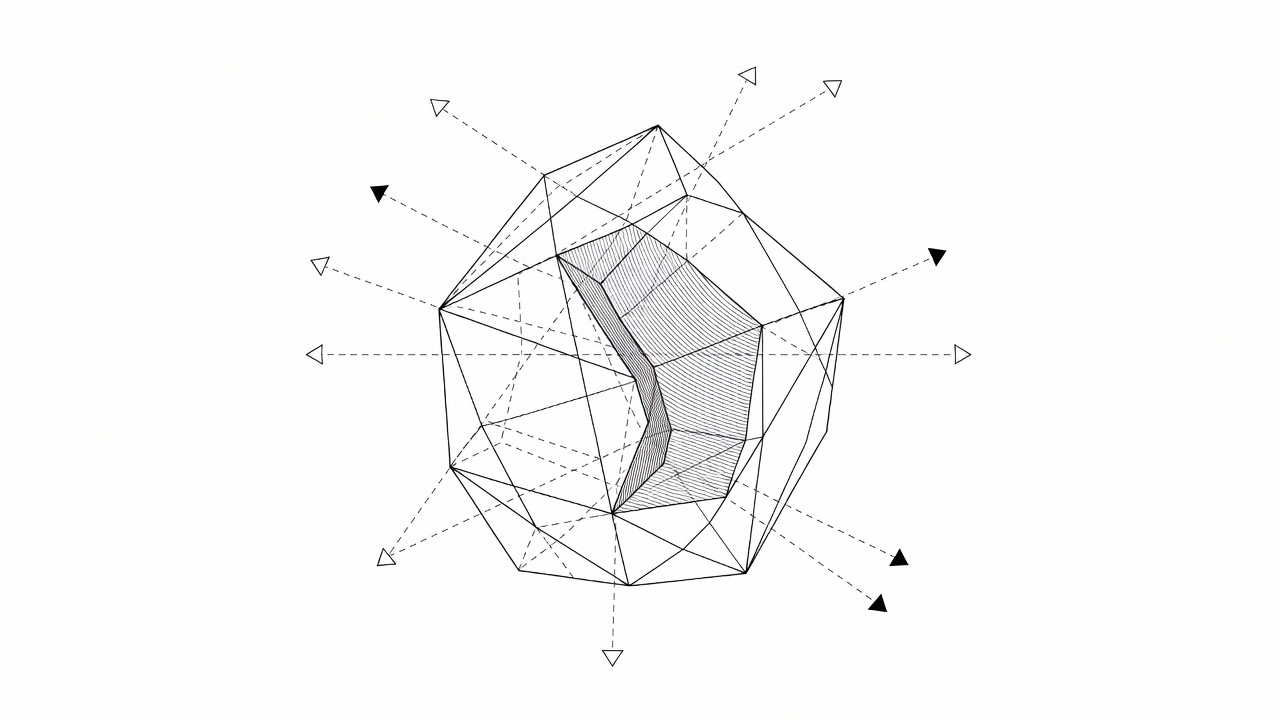
A recess that was never observed should not become an apparently measured surface because a meshing algorithm closed it. Preserve a coverage map and distinguish sampling gaps from losses in the physical object. A hole in a mesh and a hole in a sculpture are different conditions, although a final rendering may make them look identical.
Use photographs of the acquisition setup to explain inaccessible areas. Record which side faced a support, whether the underside remained hidden and whether conservation restrictions prevented repositioning. These notes help future readers understand why a blank region exists and whether additional capture could resolve it. An honest gap is more useful than an undocumented patch.
Separate processing stages
Keep raw data, registration outputs, intermediate meshes and publication derivatives as distinct versions. Noise filtering, decimation, smoothing and hole filling serve different purposes; record their settings and order. A decimated model may be suitable for a browser while being unsuitable for checking a proposed fragment join. Name files according to their role instead of treating the smallest export as the master.
Texture deserves independent scrutiny. It can conceal geometric defects, simulate shallow detail or carry highlights that look like surface relief. Compare shaded geometry without texture, examine cross-sections where appropriate and review the source photographs. Color calibration and lighting documentation matter when a viewer might otherwise interpret a processing artifact as pigment, staining or material change.
Validate and package the record
Report quality in terms that match the task. Registration residuals describe aspects of an alignment, not the truth of a missing limb. If using check distances, explain how they were measured and whether they were independent of the scaling procedure. Avoid unsupported precision claims, and distinguish repeatability from accuracy. A dataset can be consistently wrong when the same bias affects every capture.
Common exchange formats such as OBJ, PLY and glTF serve different purposes and preserve different properties. Check units, coordinate orientation, textures and material references after export. The E57 format may be relevant for certain point-cloud workflows. Library of Congress format guidance and institutional repository policies can inform preservation choices, but no file extension alone ensures that a record remains understandable.
Once the measured record is stable, interpretation can begin on a separate layer. That boundary protects the capture from being overwritten by a visually persuasive completion and makes later disagreement easier to investigate.