Start with an object, not an ideal
AI digital sculpture restoration can make a damaged object appear complete before anyone has established what is missing. A generated hand may be anatomically convincing yet inconsistent with the surviving wrist. A symmetrical face may erase deliberate asymmetry. Begin with the actual object: its material, dimensions, condition, orientation and known history. Record observations before selecting a model or collecting attractive reference images.
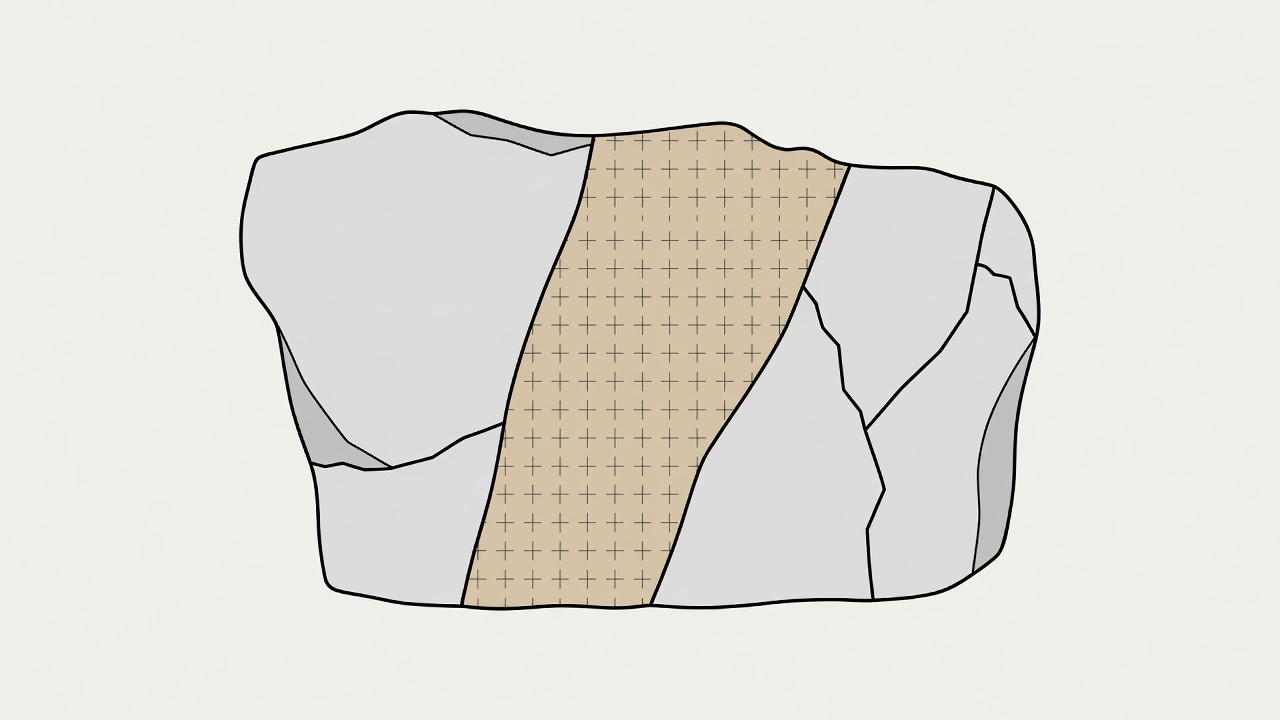
A condition assessment should distinguish breakage from weathering, intentional modification and previous intervention. Those categories can overlap. A clean-looking boundary in a digital mesh might be a fracture, an occluded surface or a software crop. Describe what is visible and identify who made the observation. Where examination is limited to photographs, say so explicitly; image-based interpretation is not equivalent to direct access.
Read boundaries as constraints
Fracture surfaces may constrain the position of a detached fragment through matching geometry, material continuity and tool marks. None of those clues should be judged from a polished render alone. Surface deposits, deformation and later repairs can complicate an apparent fit. Retain detailed photographs and unaltered measurements so that another specialist can inspect the proposed relationship.
Negative evidence also matters. An attachment hole may narrow the possible construction methods without identifying a particular accessory. The absence of a visible joint does not prove that a part was integral, especially where surfaces are inaccessible. Write down both the constraint and its limit: “a fixing is visible” is stronger evidence than “the figure held a spear.”
Build an evidence matrix
Not all sources answer the same question. A historical photograph may establish that an arm existed at a certain date, while revealing little about its concealed side. A cast may preserve an earlier state but include workshop repairs. A related sculpture may explain a visual tradition without documenting this object. Keep those distinctions visible instead of converting every source into a generic reference image.
| Source type | Useful for | Important limitation |
|---|---|---|
| Direct surface observation | Present condition and accessible material | Does not recover lost geometry |
| Metric capture | Recorded contours and spatial relationships | Coverage and calibration constrain accuracy |
| Archival photograph | Earlier appearance and visible relationships | Perspective, date and retouching need review |
| Historical cast | An earlier transmitted shape | May include additions or copying distortions |
| Comparative object | Possible typology, pose or technique | Similarity is not object-specific proof |
Keep chronology attached to the surface
An object can contain ancient material, a nineteenth-century addition and a modern mount within the same scan. A geometrically accurate model of its current condition is therefore not automatically a model of its earliest condition. Assign chronological interpretations only where evidence supports them, and retain a present-state layer that does not silently remove later history.
The Venus de Milo at the Louvre offers a familiar reminder that an incomplete silhouette can remain intelligible without an agreed completion. The changing restoration history of the Laocoön group in the Vatican Museums illustrates why reconstructions should remain revisable. These examples do not prescribe a solution for another object; they show why interpretations need dates, sources and room for correction.
Consult beyond the reference library
Provenance research can reveal excavation contexts, transfers, display alterations and losses that shape the reconstruction question. Consult collection staff, conservators, archaeologists and relevant communities where appropriate. An object’s cultural meaning may make a proposed completion sensitive even when the technical work is entirely digital. Public accessibility does not remove the need to consider permissions and context.
ICOM’s Code of Ethics for Museums provides a useful institutional frame, while the Venice Charter and the Nara Document on Authenticity encourage attention to evidence and cultural context. They are not automatic approval mechanisms for AI output. Treat their principles as prompts for informed review rather than as labels that certify a particular digital reconstruction.
Write the question before the answer
Conclude the assessment with a narrow research question. “Can these two fragments join?” requires different evidence from “what poses remain possible?” Define what would support a proposal, what would contradict it and what cannot currently be tested. This makes later AI assistance easier to evaluate and reduces the temptation to mistake visual finish for historical knowledge.
Keep a short list of missing evidence beside the brief: an unseen underside, an undated photograph or an unavailable excavation record. Such gaps are not defects to hide. They explain why one region may be measured, another cautiously inferred and a third deliberately left blank.